qEEG brain mapping, TMS, neurofeedback, biofeedback and selected neuromodulation pathways considered according to individual clinical suitability.
Brain-activity recording and quantitative analysis
Magnetic stimulation with suitability and safety screening
EEG feedback used as a training approach
Physiological feedback and regulation training
Selected non-invasive neuromodulation approaches
Combined pathway only where clinically justified
At Omnia, applied neuroscience services sit within the broader field of neuromodulation. Treatment is personalised according to symptoms, clinical history, goals and, where appropriate, qEEG findings.
These approaches may be considered on their own or alongside psychotherapy, psychiatric care and other interventions as part of an integrated treatment plan.
Neuroplasticity is the brain’s capacity to adapt and reorganise in response to repeated experience and stimulation. The clinical aim is to support regulation over time, not to promise a guaranteed or immediate outcome.
qEEG records electrical brain activity and applies quantitative analysis to the recording. At Omnia, qEEG findings are considered alongside clinical history, current presentation and treatment goals.
qEEG brain mapping is required before beginning Applied Neuroscience treatment at Omnia. It provides additional clinical information but does not make a diagnosis on its own.
Neuromodulation can be thought of as a conductor guiding an orchestra. Each brain network has a different role to play. When these networks are not well coordinated, functioning can become less efficient. Through gentle, targeted modulation, the aim is to support better balance and synchrony so the brain can function in a more integrated way.
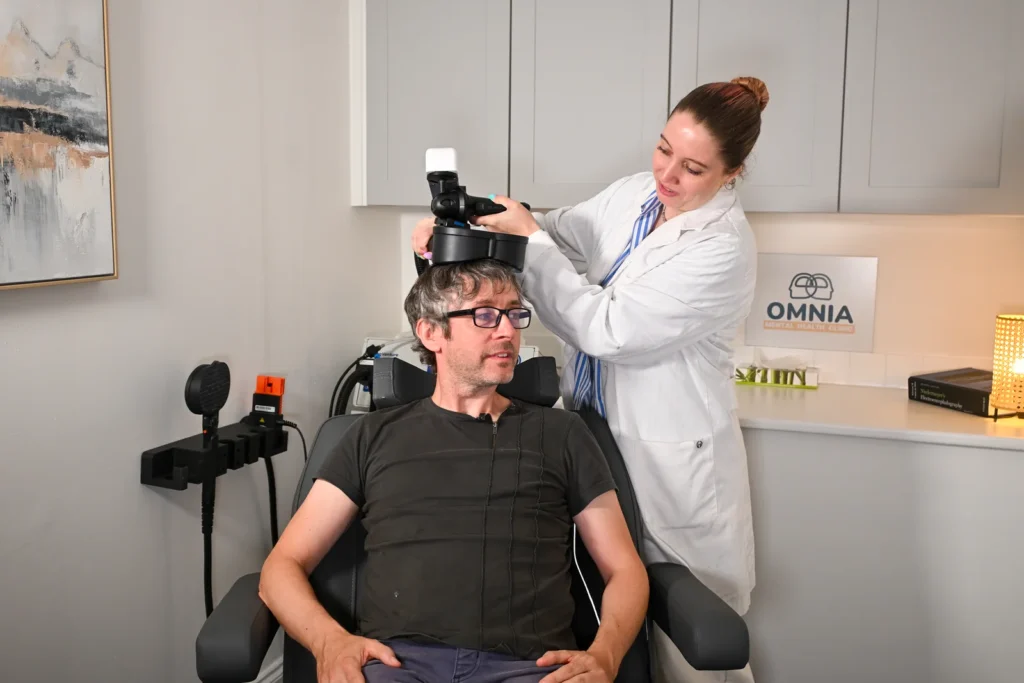
Non-invasive magnetic stimulation delivered with clinical suitability and safety screening.
EEG feedback used as a training approach, with the protocol informed by the wider clinical picture and qEEG findings.
A combined neuroscience pathway where more than one modality is selected only for a clear clinical reason.
Low-intensity electrical stimulation considered only after suitability, contraindications and protocol-specific evidence are reviewed.
Red or near-infrared light used selectively within a wider personalised treatment plan where appropriate.
Real-time physiological feedback used to develop awareness and regulation skills, according to the individual’s needs and treatment plan.
Health history, medication, current presentation, safety considerations and preferences must be reviewed before a service is recommended.
Evidence, expected effects and limitations can differ by indication, device, protocol and individual clinical context.
Services may be combined only when there is a clear clinical rationale, with alternatives and limitations discussed.
Applied neuroscience may sit alongside psychological, psychiatric or medical care. It should not replace care that remains clinically necessary.
Review symptoms, history, medication, goals, previous treatment and relevant safety considerations.
Record and analyse brain activity, using the findings as additional information rather than a standalone diagnosis.
Consider evidence, risks, alternatives, preferences and whether any neuroscience service is appropriate.
Deliver the agreed protocol with monitoring, review and changes where clinically indicated.
Yes. qEEG brain mapping is required before beginning Applied Neuroscience treatment at Omnia. The findings are considered alongside clinical history, current presentation and treatment goals, and do not make a diagnosis on their own.
No. Your presentation, health history, medication, safety considerations and preferences must be reviewed before any service is recommended.
Sometimes, but only when there is a clear clinical reason. Any combined plan should include discussion of the evidence, limitations and alternatives.
Not necessarily. Applied neuroscience may be used alongside psychological, psychiatric or medical care where appropriate and should not replace care that remains clinically necessary.
An initial consultation can help clarify whether qEEG and any neuroscience-based service are appropriate within your wider care plan.