Dublin 2
Mon–Sun 9:00–21:00
 Book an appointment→
Omnia brings together clinical psychology, psychotherapy, specialist assessment, psychiatry and carefully governed applied neuroscience within a genuinely personalised model of mental health care.
Our focus is the whole clinical picture, not a diagnosis or technology in isolation.
Omnia Mental Health was founded with a clear vision: to bring together clinical psychology, psychotherapy and neuroscience within a genuinely personalised model of mental health care.
Mental health cannot always be fully understood through symptoms or diagnostic labels alone. Two people with the same diagnosis may experience very different difficulties and may respond differently to treatment. We therefore consider psychological, cognitive, neurodevelopmental, physiological and, where relevant, neurophysiological factors together.
Different services can be used individually or combined within a coordinated plan according to each person’s needs.
Evidence-informed psychological care for adults, children and adolescents, with treatment matched to the individual and the clinician’s expertise.
Psychological, neuropsychological, educational, ADHD, autism and other assessment pathways designed around the question that needs to be answered.
Selected services such as qEEG brain mapping, neurofeedback, TMS, biofeedback and other non-invasive approaches where clinically appropriate.
A central principle at Omnia is that care should go beyond a one-size-fits-all model. Treatment is guided by the individual’s history, symptoms, strengths, goals and response over time.
Where objective measures such as cognitive assessment or qEEG add useful information, they can contribute to the wider clinical picture and support treatment planning. They do not replace clinical judgement or make a diagnosis on their own.
Psychological, medical, cognitive and neuroscience-based approaches can be considered together rather than in isolation, while retaining clear professional and clinical boundaries.
Progress is reviewed over time. Plans can be adjusted according to clinical response, changing needs and appropriate objective findings when available.
Omnia’s multidisciplinary model brings together professionals from psychology, psychiatry, occupational therapy, educational psychology and applied neuroscience. Depending on the person’s needs, different clinicians may contribute to assessment or treatment while care remains coordinated within an agreed plan.
New technologies and neuroscience-based approaches are considered within the wider clinical context. They are not used simply because they are innovative, and they should not replace psychological, psychiatric or medical care that remains clinically necessary.
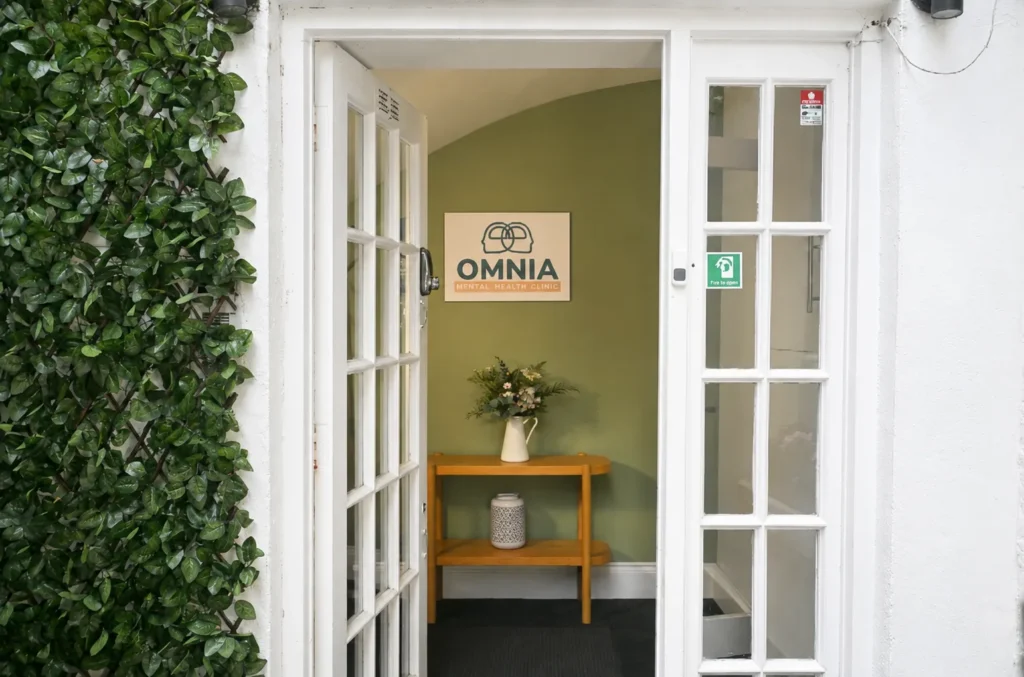
Omnia Mental Health Clinic is based at 122 Baggot Street Lower, Dublin 2, D02 NC82.
The clinic brings psychological care, specialist assessment, psychiatry and selected applied-neuroscience services together within one setting.
Being able to access different disciplines within one clinic can make communication and treatment planning more straightforward when multidisciplinary input is appropriate.
You can contact Omnia directly without a GP referral. Where appropriate and with consent, Omnia can also work alongside GPs, psychiatrists, psychologists or other clinicians already involved in care.
Professional registrations, memberships, Chartered status, licences and certifications are displayed with the individual clinician or professional to whom they apply. We avoid using organisational badges as general clinic endorsements unless the relationship and permission to display them are verified.
Omnia offers an integrated model of care combining clinical psychology, psychotherapy, specialist assessment and selected applied-neuroscience services. The aim is to consider the wider clinical picture and tailor care to the individual.
Professionals from different disciplines can contribute where appropriate. Depending on individual needs, assessment and treatment can be coordinated within one plan rather than approached as unrelated services.
Care is evidence-informed and guided by developments in clinical psychology, psychiatry, neuropsychology and applied neuroscience. New technologies are considered within the wider clinical context rather than used simply because they are innovative.
It means psychological, medical, cognitive and neuroscience-based approaches can be considered together where appropriate, with the final plan shaped by the person’s needs, goals, preferences and clinical presentation.
The OMNIA Method explains how we move from understanding your concerns to assessment, an agreed plan, care and progress review.